Daily AI News Brief: 2026-05-07
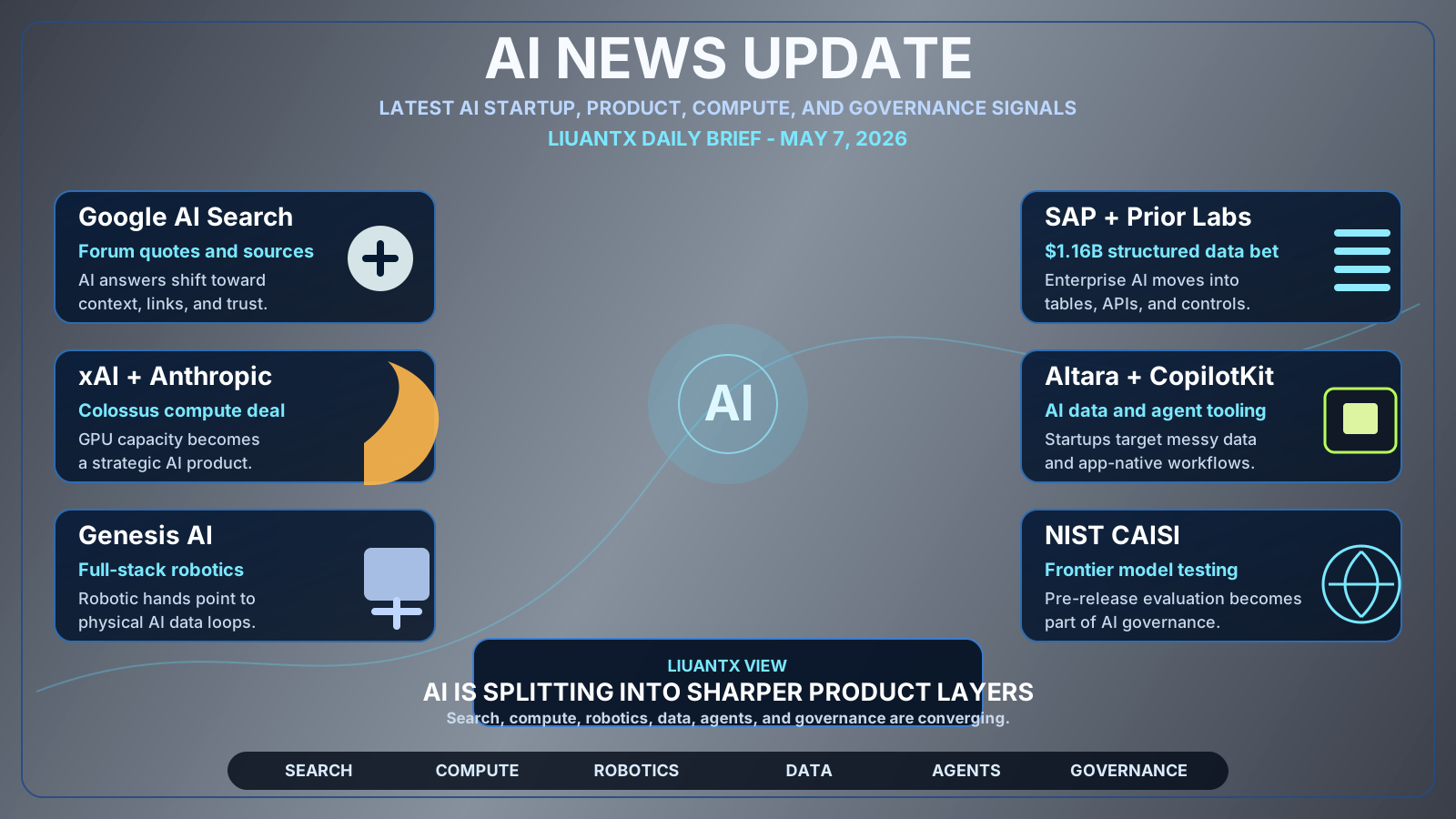
Daily AI Brief - 2026-05-07
Today's AI news cycle is less about a single model launch and more about where the AI stack is moving: search interfaces are changing, compute is becoming a strategic product, robotics startups are going full stack, and governments are demanding earlier visibility into frontier models.
Why this matters now
- AI product design is moving beyond chat boxes into search, app-native workflows, robotics, and enterprise systems.
- Compute capacity is becoming a business model, not just infrastructure plumbing.
- Enterprises are prioritizing structured data, governed access, and domain-specific AI layers.
- Frontier AI oversight is becoming more operational, with pre-release model testing moving into government workflows.
Selected Developments
-
Google updates AI search to include quotes from Reddit and other sources - TechCrunch Google is adding more source context to its AI search experience, including excerpts from forums, blogs, and subscribed news sources. Why it matters: AI search is becoming a curation and trust problem. Teams building knowledge products should design for citations, provenance, and fallback paths instead of treating generated answers as the whole interface.
-
Is xAI a neocloud now? - TechCrunch Anthropic is buying compute capacity from xAI's Colossus 1 data center, turning one of xAI's biggest infrastructure bets into a direct revenue line. Why it matters: AI infrastructure is becoming productized. For operators, this reinforces that model strategy and compute strategy are now tightly linked.
-
Khosla-backed robotics startup Genesis AI has gone full stack, demo shows - TechCrunch Genesis AI showed its GENE-26.5 robotics model working with in-house robotic hands across cooking, lab, music, and manipulation tasks. Why it matters: physical AI is shifting from simulation demos toward integrated model, hardware, sensor, and data loops.
-
SAP bets $1.16B on 18-month-old German AI lab and says yes to NemoClaw - TechCrunch SAP plans to acquire Prior Labs and invest heavily in tabular foundation models for structured enterprise data, while restricting unapproved agent access to its APIs. Why it matters: enterprise AI value will often come from databases, tables, permissions, and workflows, not only from broad language models.
-
Altara secures $7M to bridge the data gap that's slowing down physical sciences - TechCrunch Altara raised seed funding to unify fragmented R&D data across batteries, semiconductors, medical devices, and other physical-science teams. Why it matters: many AI opportunities start with messy operational data. The useful layer is often the one that makes scattered logs, reports, and measurements queryable.
-
CopilotKit raises $27M to help devs deploy app-native AI agents - TechCrunch CopilotKit is building tooling around app-native agents and its AG-UI protocol, helping AI agents connect to real application state and user interfaces. Why it matters: the next wave of AI adoption will be judged by how well agents act inside software products, not by how impressive they sound in isolated chat windows.
-
CAISI signs agreements for frontier AI national security testing with Google DeepMind, Microsoft and xAI - NIST CAISI announced agreements to evaluate frontier models before public deployment and support national-security-focused AI testing. Why it matters: safety, security, and model evaluation are becoming part of the release process for the most capable systems.
Practical Moves for Liuantum Readers
- If you are adding AI search, make source attribution and confidence handling part of the design from day one.
- Treat compute, latency, and hosting choices as strategic architecture decisions, not late-stage optimization tasks.
- For enterprise AI, audit where your real value sits: structured tables, documents, sensor logs, APIs, or workflow context.
- Prefer app-native AI agents that can see state, take scoped actions, and keep humans in the loop.
- Build a lightweight evaluation checklist before deploying any AI feature that touches customers, internal data, or regulated workflows.
Liuantum View
The useful AI market is fragmenting into sharper layers: AI-native interfaces, domain data platforms, agent tooling, robotics systems, compute providers, and governance infrastructure. For builders and business teams, the practical advantage comes from choosing the right layer to own and then integrating it cleanly into real workflows.